Fact of the Week

Forced rhubarb in season now. Don't miss out!

Sunday, 7 August 2011

A very British summer

I have had a good summer for fish.  At the beginning of June, I was treated to lunch at Rocksalt, Mark Sargeant's new restaurant in Folkestone.  Perched on the edge of the harbour, the sea laps at the feet of the restaurant at high tide and at low tide the primary coloured fishing boats rest on the sandy sea bed.  On a clear day you can see France.  Whilst the restaurant is worth the trip for the views alone, the food is also superb.  Starters included pints of prawns, homemade taramasalata, cockles, crab with harissa on sourdough toast and broad beans dipped in minty salt.  We ordered almost one of everthing to share and there were unrestrained squeals of glee (probably audible in France) as everyone tucked in.  Next I had Dover sole, caught that morning, pan fried and served simply with lemon, Kentish new potatoes and tender purple sprouting broccoli.  The vegetables were the perfect compliment to the sole, whilst still allowing the fish to shine.  For pudding I had gooseberry and custard tart which was simply sublime. 
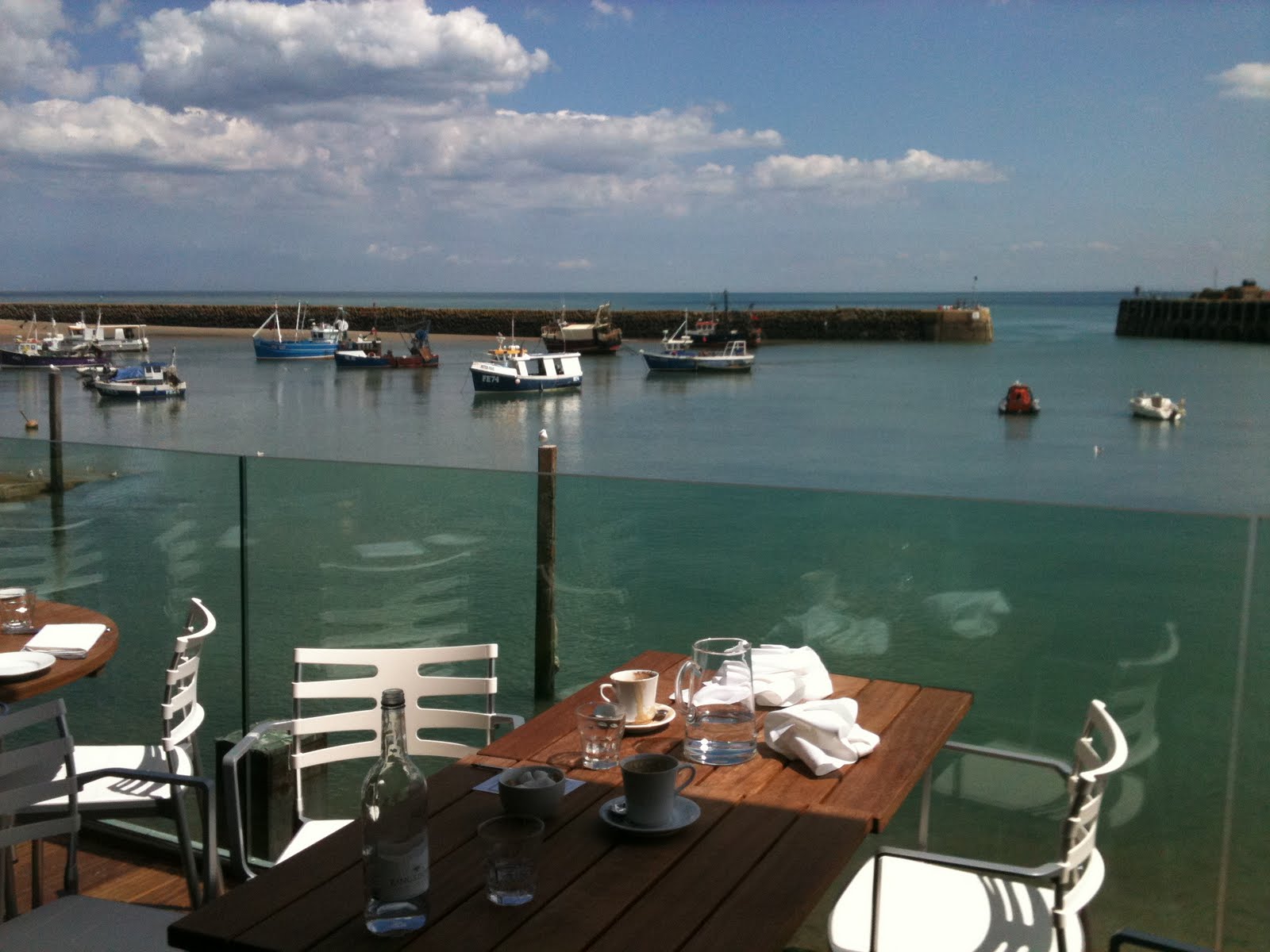
High tide at Rocksalt


Low tide at Rocksalt

Later in June, I sailed with friends from Falmouth to Fowey.  Having picked up a mooring, first stop was the fishmonger's.  Given the limited space to cook on board, we chose sea bass fillets accompanied by some wonderfully large handfuls of samphire.  Back on board, we baked the bass fillets on a bed of garden herbs and served them with an irrestisible combination of samphire and fresh peas - the sweetness of the peas the perfect match for the salty samphire.  Eaten on deck with a glass of white wine, it was the very best of British food and the best of the British summer. 

The Stiffkey marshes
July brought rain if only because I had planned to go
camping in north Norfolk.  Sea trout (in season from April/May to the middle of August) and prawns were the order of the day.  High Sand Creek Campsite in Stiffkey (pronounced 'Stukey' by the locals) looks out over the shimmering Norfolk flats, to the wide expanse of deep blue North Sea beyond.  Before dinner we wandered over the salt marshes to Stiffkey Creek for a swim (the water in the creek is an incredibly cleansing mix of fresh water and sea water).  Not a soul in sight, the 360 degree horizon our own, we floated on our backs in the creek taking in the cloudless blue sky and sea air in greedy gulps.  As we walked back over the flats to the campsite, carefree and light-headed with well-being, we picked samphire and ate it as we walked.  What was left we barbecued with the sea trout, which we ate in the evening sun looking out over the flats where we had picked the samphire only moments earlier.  On Sunday, we took the leftover barbecued prawns to Holkham Beach, where we lunched on  the prawns, unceremoniously, with hunks of fresh bread, whole tomatoes and cucumber.  Afterwards, sticky fingers (as well as our heads, shoulders, knees and toes) were  washed clean in the great blue basin of the sea.   

Holkham Beach

I have also eaten fish closer to home: barbecued mackerel stuffed with herbs and eaten on one of the rare summer weekend evenings when it was warm enough to sit in the garden until late; sea bass slashed and stuffed with basil, rosemary and garlic; pan fried mackerel fillets with a herb crust.  It has reminded me how much I enjoy fish and that I do not cook it nearly often enough.  It is easy to make excuses about it being difficult to get hold of and forgivable to be uncertain as to which fish are sustainable and therefore ok to eat.  And whilst fish does not grow in the garden and I cannot therefore simply open the back door and forage for dinner (as is currently my wont), it only requires a little extra effort to look up my local fishmonger (the very excellent F.C.Soper in Nunhead), cycle to the shop on Saturday morning and treat myself (and friends) to seasonal, sustainable British fish (a good fishmonger will be able to advise you what to buy), packed with essential oils and fishy goodness.  If you have herbs in the garden, on your balcony, in a window box, you'll need little else. 
Inspired by the prawn feast we had on Holkham Beach, I put together this prawn salad when I got home, which is really a deconstructed version of the prawn sandwiches we had on the beach but ever so slightly more elegant to eat!

Deconstructed prawn salad

Marinating prawns
For the prawns
10 raw prawns
Zest and juice of 1 lemon
Parsley, finely chopped
Pinch of dried chilli flakes
1 glove of garlic, finely chopped

For the salad
250g ripe tomatoes
250g ripe tomatoes

Prawn salad
1 tbs red wine vinegar
1/2 clove of garlic, finely chopped
Pinch of dried chilli flakes
1/2 ciabatta loaf
Olive oil
Cucumber
Parsley, finely chopped

Marinade the prawns in the lemon zest and juice, parsley, garlic and chilli.
Cut the tomatoes in half and squeeze the juice and seeds into a sieve over a bowl to collect the juice.  Discard the seeds.  Add the red wine vinegar, garlic, chilli and 2 tablespoons of olive oil to the tomato juice.  Season with salt and pepper.
Tear the bread into 3cm pieces and add to the bowl with the tomato juice.  The bread should all be wet; add a little water if you do not have enough juice.
Chop the tomatoes and cucumber into chunks and add to the bread. Add the parsley and drizzle with olive oil.
Heat some olive oil in a frying pan and cook the prawns in all their juices until pink all over.  Add to the salad and mix to combine all the ingredients. 

Sea bass fillets with garden herbs

Sea bass fillets
Herbs
Olive oil
Lemon

You can use almost any herbs you want for this recipe.  I used a combination of rosemary, oregano and basil.
Preheat the oven to 200C.  Line a baking dish with sliver foil, leaving a generous amount of foil at one end of the dish and the untorn roll of foil at the other end. 
Scatter herbs over the bass of the foil.  Lay the bass fillets on top and scatter further herbs on the fish.  Drizzle with lemon juice and olive oil. 
Cover the fillets with the foil, folding the foil at the edges to form a parcel.
Bake in the oven for 15 minutes.

Peas and samphire
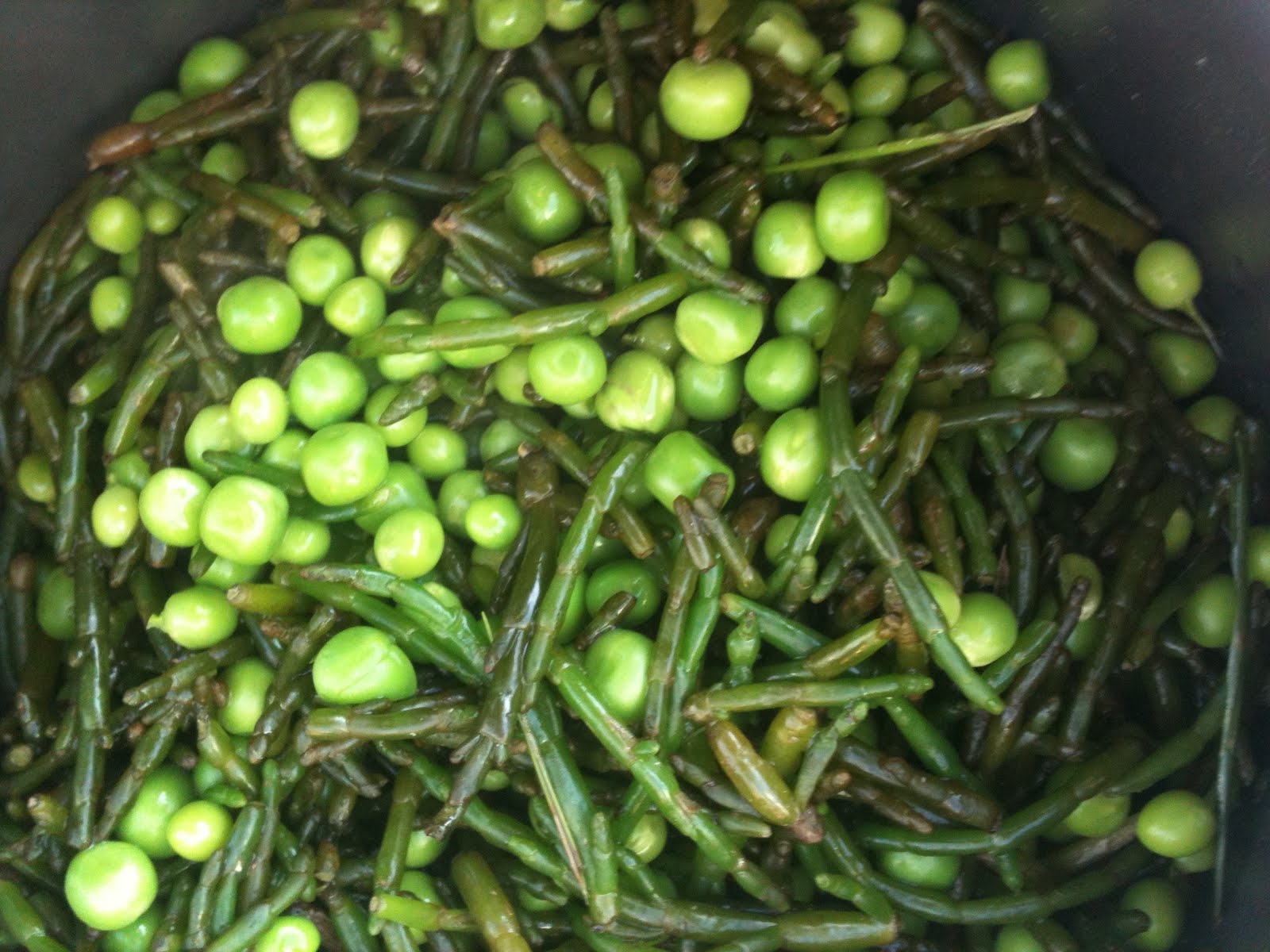
Cook the peas in boiling water.  Wash the samphire in cold water.  Just before the peas are cooked, add the samphire and allow to warm through (a minute only).  Drain and drizzle with olive oil, salt and pepper.


Enjoy x

Sunday, 17 July 2011

Courgette deficit

3 July 2010
There is a courgette deficit in south-east London.  Or more precisely, in my particular corner of south-east London, where despite begging, cajoling and imploring the courgettes are stubbornly refusing to grow. 

Last year, courgettes formed the mainstay of my summer diet.  I grew four plants (three in the ground and one in a pot) and the resulting crop fed friends, neighbours and colleagues alike from June right through to the end of September.  My naughty little sister, who was in residence throughout that period, was treated to an almost exclusively courgette based diet (her protestations - she does not like courgettes - did not unfortunately prompt her to cook).


Allium sphaerocephalon
The superfluidity of courgettes forced me to be creative in the kitchen; courgettes were chopped, peeled, diced, sliced, roasted, steamed, blanched, boiled and baked and formed the basis of salads, pasta, couscous, fregola, frittata, savoury cheesecake, quiches, tarts and cake.  And still the courgettes kept on coming.  I ate the flowers stuffed with ricotta, mint and lemon or mozarella, anchovy and basil and fried in a light batter, I indulged in tender, young baby courgettes no longer than your thumb and I still had enough full sized courgettes to sustain me and my naughty little sister (so long as I could tolerate the complaints) week after week the whole summer long (our courgette consumption was such that not one courgette became a marrow).


However, for all their faultless productivity, the courgette plants grew long and leggy.  They sprawled untidily, trailed over the edges of beds and across paths, ensnaring neighbouring plants in their tentacle-like leaves.  So when the time came to sow this year, I eschewed my heavy cropper from last year, Firenze, in favour of Diamante Nero, which described itself as being 'compact' and 'ideal for a small plot'.

A male flower
The germination rate was poor (I should have read the signs and sowed some faithful Firenze at that stage) and their growth since has been indiscernible.  Of my three plants (after last year I decided that four plants was excessive.  I can now only dream of a courgette glut), two have barely progressed past their dicotyledons (the first two embryonic leaves produced by the plant on germination) whilst the third has made a modest effort to grow.  It has a handful of leaves, each one no bigger than a ramekin dish, and has teased me with three male flowers (courgettes produce male and female flowers but only the female flowers produce fruits). 

I have learnt my lesson.  I will never again sacrifice a plant with a proven track record on the altar of horticultural order.  With dinner so dependent on my evening harvest, my priority is productivity, not prettiness.  I am reminded daily of my ill decision: each courgette free harvest is as disappointing as the one the night before.  Others have suffered from my mistake too: Supercook Kate who relied on me for her courgette plants (in exchange for aubergines in the great south-east London plant swap); and friends and colleagues who will not this year be sharing in my surplus.

The first tomatoes
In other news, the rocket, chard, french beans and lettuce are doing well; the tomatoes have the first red blush of summer; and the beetroot, aubergines and peppers are making slow but steady progress. 

3 July 2011 
Three puny plants continue to stare up at me from the vegetable bed where three spiny, dark green, hairy leaved vines should be, jostling with each other for space in which to stretch their glossy green limbs.  If I could rewind the summer, I would welcome their rangy, sprawling predecessors with open arms. 

The courgette deficit has forced me to cook new recipes from the produce currently on offer in the garden.  Below is a warm salad recipe I put together last Friday (assisted by a campari (or two) at the wonderful Frank's Campari Bar).  The earthiness of the baby chard and beet leaves compliments the warm new potatoes, whilst the roasted tomatoes, french beans and hard boiled egg offer a taste of a mediterranean summer. 

Salade Royale

Tomatoes
New potatoes
French beans
Anchovy fillets
Baby chard, beet leaves
Eggs
Capers
Cornichons, finely chopped
Dressing: 1 tbsp smooth Dijon mustard, 1 tbsp red wine vinegar, 1 tbsp olive oil, water.

Preheat the oven to 170 degrees.  Quarter the tomatoes, sprinkle them with dried oregano and drizzle with olive oil.  Slow roast in the oven for 1 hour.
To make the dressing mix the mustard, vinegar and olive oil, gradually add water until you have a thin dressing.  Season with salt and pepper.
Half the new potatoes and cook in boiling water.  Drain and whilst still warm pour over the dressing. 
Hard boil the eggs in boiling water for 7 minutes.  Run under a cold tap to stop the cooking process.  Peel and cut into quarters.
Steam the green beans until just tender.
In a bowl, mix the capers, chopped cornichons, anchovy fillets, leaves, beans and potatoes.  Add the tomatoes and egg and carefully stir to combine.  Add extra dressing to taste. 

A fanfare of lillies?

Thursday, 23 June 2011

Summer love

May is but a distant memory.  The summer sun has been replaced by incessant rain, heavy during the week, torrential at the weekend. 

The weather has battered the garden.  First, weeks of no rain.  The ground dried, then parched.  My tender vegetable seedlings: stunted, wilted or bolted.
Next, weeks of pounding rain.  The strawberries, which were on the cusp of ripeness, are spoilt, rotten, their soft skins pummelled by the rain's heavy drops.  The roses, delphiniums, poppies, lupins, stocks and sweet williams have been stripped of their blossom and their petals, browned by the rain, are strewn, like Miss Haversham's confetti, over the garden.  The, at best, tepid temperatures are insufficient to fuel the garden's usual heady summer growth.

It is raining as I write, after a soggy cycle home.  The outlook for Wimbledon is bleak, the first day has been a wash out.  (Murray is still in but for how long?)  I am awaiting the outrage, the national shame, as Wimbledon strawberry sales run dry: are British stocks too low (the early crops accelerated by the May sun and now exhausted, the later crops waterlogged) to support Wimbledon's heavy demand for this quintessentially English fruit?

I took the opportunity, in a rare dry moment at 6.30 this morning, to sow the first of the winter seeds: cavolo nero, purple and white sprouting broccoli and curly kale.  I will bring them on in pots and plant them out in September, once the summer crops are over and space has been vacated in the vegetable beds.  Although I know that the plants need time to develop and grow strong before the winter cold sets in, I feel forlorn to be preparing for winter when it is not yet midsummer and summer's stay seems to have been altogether too short. 

The silver lining (to the threateningly dark, sometimes black, clouds that appear to have appropriated the English summer) are the peas.  Sowed improbably early (even in the greenhouse) at the end of February and planted out in April, the peas were well established before the May drought, their pods ready to swell in time with the June rains.  The plants are now weighed down with pods, ready for picking, each pod offering a taste of a long lost summer. 


I am not the only one to have enjoyed the peas.  One morning last week, whilst doing my usual early morning inspection, I was delighted to find the garden dancing with bluetits, flashes of emerald blue darting through the taller plants and trees.  My delight was however short-lived when I realised that the tits were in fact feasting on my peas, their mood as jubilant as mine after a snack on the tasty sweet green Lilliputian globes of goodness.  Dressed for the office rather than the garden, I scrambled, in my suit, for some netting with which to protect my precious crop.  A struggle ensued and lawyer, peas and sense of humour became quickly entangled, whilst the tits looked on quizzically, bemused by the gardener's new and not entirely suitable attire and confused as to why having been encouraged into the garden, they were suddenly unwelcome.  With the peas protected, my train missed, I made my late way to work, pea-ce of mind restored.

From a gardening perspective, June has had little to commend it.  My peas have provided a ray of sweet, green sunshine in this otherwise soggy summer.  They offer a burst of summer even if eaten holed up in the kitchen, the hatches battened down against against the inclement weather raging outside.

(I have used fresh peas for all the recipes below.  If you are using frozen peas, cook the peas first.) 

Snacking Peas
(These are so good that I have been serving them in individual portions in ramekins, to be eaten with a teaspoon, as part of a selection of starters or simply to whet the appetite.  They are always gobbled up before anything else.  Otherwise, simply serve as a side dish).
Fresh peas, podded
Olive oil
Basil, finely chopped
Parmesan shavings

Put the peas in a colander and pour over a kettle of boiling water (This is all the cooking they need and will ensure that the peas retain their crisp bite).
Whilst hot, drizzle over the olive oil and basil and stir through. 
Seaso with salt and pepper and scatter the parmesan shavings on top.

Pea and broad bean crostini
(courtesy of Jamie Oliver)

150g fresh peas (i.e. 150g once podded)
250g broad beans (ditto) (cook first if you are using frozen broad beans)
Mint
Salt and pepper
Olive oil
50g parmesan, finely grated
Juice of 1 lemon
1 clove of garlic
Sourdough bread
Mozzarella

Bash up the peas, broad beans and mint in a pestle and mortar (or in a saucepan with a potato masher).  You may need to do this in batches unless you have a very large pestle and mortar!  Season with salt and pepper.  Stir in the parmesan and enough olive oil to bind all the ingredients together.  Add half the lemon juice and taste.  You may need to adjust the lemon juice, olive oil or salt and pepper to taste. 

Toast slices of sourdough.  Whilst still hot, rub each slice with the garlic (just lightly, maybe two stripes on each piece, any more and the garlic will be overpowering) and spread the peas and broad beans on top.  Top with torn pieces of mozzarella.  Drizzle with olive oil and a few more mint leaves.

Pea and herb salad
(borrowed and adapted from Yottam Ottolenghi writing for The Guardian)
50g pearl barley
300g peas (or a mix of peas and broad beans)
1 crisp green lettuce, finely chopped
Mint, roughly chopped
Basil, roughly chopped
1 tbsp lemon juice
Olive oil
Salt and pepper
Goat's cheese

Cook the pearl barley (30-35 minutes in a saucepan of boiling water or 15 minutes in a pressure cooker).  Refresh in cold water and drain.
If you are using fresh peas/broad beans, place in a colander and pour over a kettle of boiling water.  If you are using frozen peas/broad beans, cook in boiling water.
Put the peas, broad beans, lettuce, pearl barley, herbs, lemon juice and olive in a bowl and stir.  Season and adjust the lemon juice and olive oil to taste. 
Crumble the goat's cheese over the top.

Strawberry clouds
(I have snuck one strawberry recipe in here.  If you have any strawberries left in the garden or can get hold of some, this recipe is sure to make you smile).

300g strawberries
Mint leaves
50g caster sugar
3 egg whites
140ml double cream

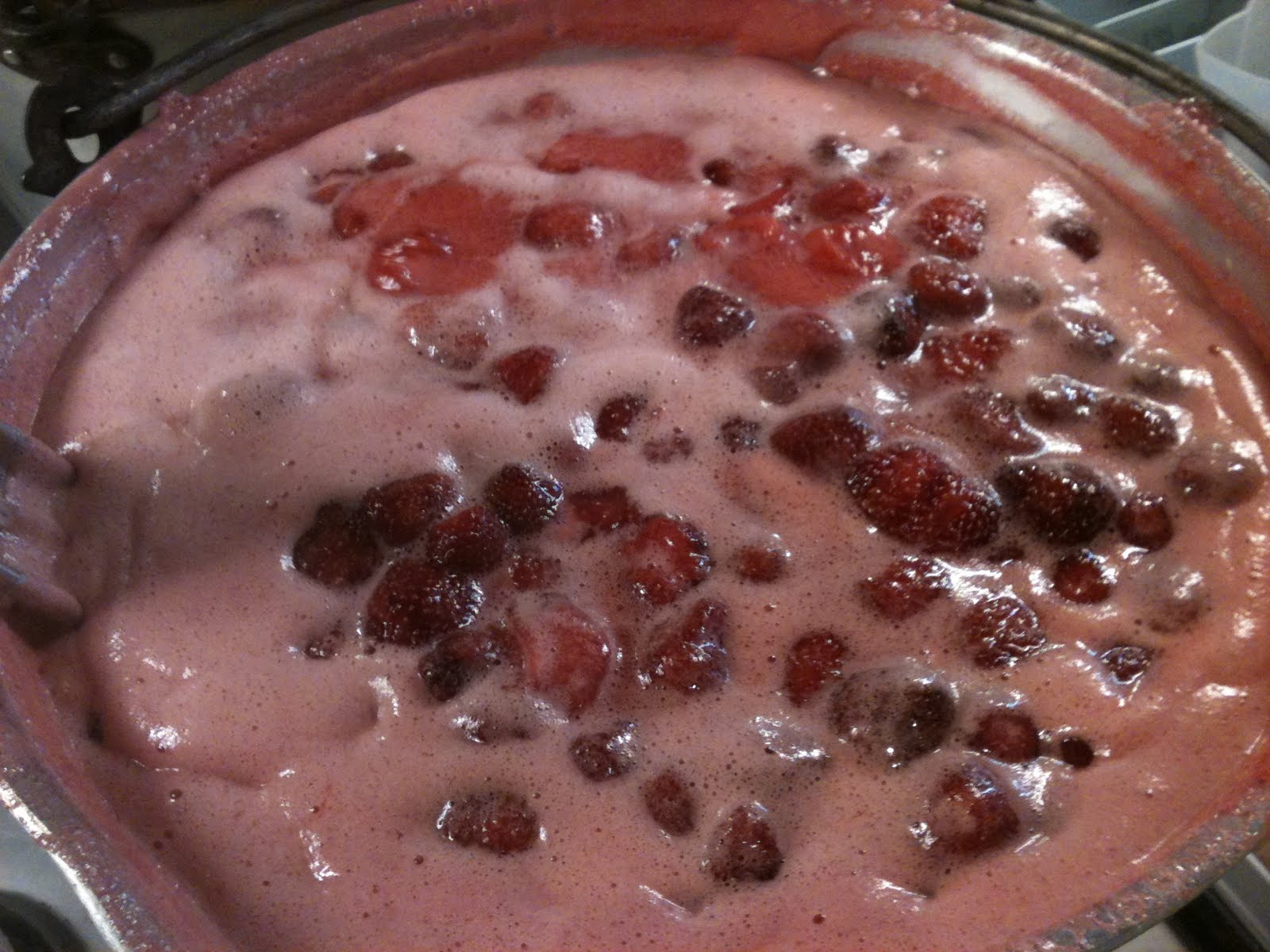
Blitz the strawberries in a food processor.  Add a few mint leaves and blitz again.  Sweeten to taste. (Sugar will bring out the flavour of the strawberries.  Add it gradually, tasting as you go along.  You should be able to taste the mint but it should be subtle.  Add more mint leaves if desired and blitz again but be careful not to overpower the strawberries).  Pass the strawberry mixture through a sieve and discard the pips etc. 
Whisk the egg whites until they form stiff peaks.  Then whisk in the sugar until the mixture has a glossy sheen.
In a separate bowl, whisk the cream until thickened but not stiff. 
Fold the cream, egg whites and strawberries together (using a metal spoon).  Spoon into glasses and chill.


Monday, 13 June 2011

Maltby Street: far from the madding crowd

Muddy beets and carrots
Last Saturday I made the short journey north to Borough Market.  When I first moved to London, only six years ago, Borough Market was a favourite Saturday activity but, disillusioned by the hordes of people, the need to be there at the top or tail of the day, the congestion making it impossible to shop (and preferring to spend my Saturday mornings cultivating my own produce rather then buying other peoples'), I had not been for some time.


My ulterior motive in going to Borough Market was to compare and contrast it to stop number 2 on my Saturday food-centric agenda: Maltby Street.  I was aware of the reported tensions between the two, the rumours of rent rises forcing traders to relocate from the former to the latter and Borough Market's governance's disgruntlement at the prospect of close competition, and I was intrigued to know which traders had chosen to sell at Maltby Street, either as an alternative to or in addition to Borough Market. 

Anticipating the crowds, I arrived early.  I was immediately struck by the gentrified aspect of the market's green arches.  However, the gentrification was not purely cosmetic.  Brazenly flaunting their wares behind flash signs and flashier price tags, there was an endless array of hot and prepared food, paella, steak sandwiches, hog roast, burgers, veggie burgers, pork pies, a juice bar, tableware and Borough Market emblazoned bags.  The hardworking growers and sellers for the most part gone, and with them the atmosphere, the buzz of market trade, and the exciting culinary possibility of British seasonal produce, replaced with the smell of frying. 

The Market's demise, in my eyes, was confirmed by my attempt to buy gooseberries from Turnips, the large and long established wholeseller of fruit and vegetables.  None of the three servers who tried to sell me the small, slightly furry, little green and so very British fruits that I had picked up off Turnips' showy display knew what they were.  They could not therefore tell me the price and had to go and ask at Head Office, loftily located in a glass office box above the market in the space shared with Roast (where the average cost of a main course is a £23). 

The answer was an astronomically expensive £8 per kilo, the price no doubt commensurate with the fact that Turnips' second and only other store is in Selfridges. 

Gooseberry fool
I made to leave and exiting through the eastern triangle of the Market (the Green Market), came across a ray of real market hope amongst the otherwise tourist trade:  John from Lincolnshire selling his own grown Lincolnshire produce.  Beautifully muddy carrots and beets, cabbages, radishes, peas and broad beans, onions, chard, fennel, tomatoes, cucumbers, potatoes new and old and lots more besides.  A chat revealed that he also sells at Peckham Farmers' Market on Sundays.  I came away with a smile and a kilo of gooseberries for £5.50.

On the short walk to Maltby Street, I popped in to José Pizarro's recently opened tapas and sherry bar on Bermondsey Street.  The chef and his team were prepping but José stopped to proudly show me the beautiful wood and tiled interior of his eponymous new London seat and run through the day's specials.  The smells from the kitchen were teasingly good even though it was only 9.30am.  I made a mental note to return at the first available opportunity during opening hours. 

Maltby Street is nestled under the old brick railway arches in Bermondsey.  The arches have become home to a collection of traders with a long relationship with food.  Some are aficionados of the London food scene: Neal's Yard Dairy, Monmouth Coffee, St John Bread.  Others are smaller or less well-known but no less gem like: Fern Verrow's biodynamically grown vegetables, Kitty Travers's homemade ice creams (with taste tingling flavours such as elderflower and amalfi lemon, strawberry and tarragon, pea pod and caramel and sea salt), the Gergovie Wines warehouse selling wine at the bar, to sample, to drink or to take away and Tony Booth's, a veritable Aladdin's cave of fruit, vegetables and salad.  Then there are some surprises, like Lassco who's reclaimed treasures are a trove of nostalgia, objets d'art and functionality (rows of theatre seats, school benches, a selection of steel buckets and a gym horse were just some of the finds worthy of a perusal last Saturday). 

Macerating strawberries
The arches are big enough for serious activity and alongside the more frivolous shopping and tasting to which they have become home, Monmouth roast their beans on site, St John's bakery is housed in Arch 72 on Druid Street, and Neal's Yard have their main office and wholesale business. 

I sat in the sunshine outside Monmouth on chairs strewn liberally over the pavement for the purpose and enjoyed a coffee and brioche.  The atmosphere was quietly smug: everyone else enjoying their coffee and knowing that they, like me, were onto a good thing. 

I did my weekly shop in Booths and had to exercise considerable self-restraint not to buy more than I could possibly eat in a week.  I skipped out with 7 kilos of strawberries for £10, strawberries from out the back, slightly past their pristine best but perfect for the afternoon's plans for jam.

As I was leaving I bumped into José Pizarro in his chef's whites come to collect that day's supplies and talk shop with Tony Booth.  With his beautiful restaurant and a wide range of wonderful produce just around the corner, I am sure that he too knows that he is onto a good thing. 

Strawberries on a rolling boil

Strawberry jam

Sunday, 5 June 2011

A mind of its own

The garden is suffering from neglect.  The summer season has arrived (think Chelsea, Ascot, Wimbledon; the reality is wedding, hen weekend, wedding, hen weekend, wedding) and I am spending glorious weekend after glorious weekend sipping champagne in other peoples' gardens, gardens which have been spruced, pruned, weeded and manicured within an inch of their lives for the Big Day.  The result is that my own garden has run amok.

Audrey II of the lettuce world?
The lettuce, spinach and chard are bolting.  The rocket and basil are in flower.  The wigwams of peas are dripping with swollen pods which I have not had time to pick.  And the strawberry plants are coloured red by their cheery cargo, now overripening in every additional day's sun .  And I do not have the time to harvest the garden's (un)seasonal bounty or provide it with the love and attention to which it has grown accustomed.    As the current plants exhaust themselves ahead of schedule, I am gripped with panic and a urgent need to re-sow in order to ensure a steady supply the whole summer long.


Peas ready for picking
This unprecedented behaviour (for June) has, I think, been caused by the warm weather.  Yet, the weather was not warm enough to ensure that the nuptial sweet peas were ready for Paul's and Ellie's nuptials on 21 May 2011.  Covered in buds, their development was halted by the cooler temperatures of the preceding ten days and the buds taunted me but refused to open.  In desperation, I considered a number of options (kindly proffered by friends and family who had been eagerly following the sweet peas' progress) including heat lamps and the suggestion made (by the bride) that I bring all eight of the enormous pots of sweet peas inside, turned my heating onto maximum and left the lights on overnight in order to create hothouse conditions.  After some discussion it was reluctantly agreed that these options were prohibitive, primarily on the grounds of cost and environmental impact but also concern that the use of heat lamps in my corner of south-east London might prompt suspicion from the authorities as to the legality of what I was growing.  So instead I (and the bride) came to terms with the disappointment of my failure and I prepared myself for the knowing comments from the smug grannies on the ensuing Saturday (http://tastebuds-kitchengarden.blogspot.com/2011/02/sweet-peas-and-moonwalkers.html). 

The sweet peas are a useful reminder that the garden's joyful development is, in most respects, out of my control (the lettuce, a reminder that it is in fact out of control?).  Although I am sometimes forced to quash the rising sense of alarm caused by the realisation that I have not done everything on my horticultural 'to do' list, the garden provides a healthy opposition to the orderliness of my full time job.  Whilst I can happily while away hours 'working' in the garden, removing offending weeds and evicting gluttonous slugs and snails (and ticking items off that list), all of which risk threatening the working order of my garden, I do not really want to tame it. 

I want the beds to be thick with flowers, not standing neatly to attention but cavorting wildly through the beds.  I want the vegetables to grow in an unbridled fashion, unfettered by the boundaries laid down by a strict planting plan (for I will only benefit from their unruly abundance).  I admired the free-spirited strawberry who last year made a bid for freedom from the confines of the strawberries' raised bed and sent a runner over the top and into the grass.  I applauded the strawberry's tenancy and joie de vivre (although I obviously could not allow him to stay there and trans-planted him to a more apt location back in the strawberries' bed).


The recipes this week are in recognition of the garden's hearty abundance. The first, pearl barley, pea and lettuce risotto, offers a refreshing and alternative use for lettuce, so often thought of in relation only to salad, its cooked qualities largely unsung (the just wilted lettuce provides the perfect complement to the crisp sweetness of the peas and the fresh bite of the lemony pearl barley). 

The second is a strawberry cheesecake cake (the original recipe is borrowed from the Hummingbird Bakery's strawberry cheesecake cupcake) which I made at the weekend for my local Big Lunch and which seemed to go down quite well. 

Pearl barley, pea and lettuce risotto
(I ate this just as it is but it would also be delicious with white fish or roast chicken)

60g pearl barley
1 clove of garlic, crushed
Olive oil
Frozen peas
1 courgette, diced
Vegetable stock
1 lemon
Lettuce, roughly chopped

Cook the pearl barley according to the instructions (or approximately 15 minutes in a pressure cooker).  Rinse in cold water.
Heat the olive oil gently in a frying pan and add the peas, courgette and garlic.  Fry gently until the vegetables are just beginning to colour.  Add the pearl barley and a couple of ladles of stock.  Simmer and as the stock evaporates, add another ladle of stock making sure that it does not dry out. 
Once the vegetables are cooked al dente, add a squeeze of lemon and stir through the chopped lettuce.  Season with salt and pepper. 

Strawberry cheesecake cake

240g plain flour
280g caster sugar
3 tsp baking powder
a pinch of salt
80g unsalted butter (at room temperature)
240ml whole milk
1 tsp vanilla extract
2 eggs
Strawberries, chopped into small pieces

For the icing

150g icing sugar
25g unsalted butter (at room temperature)
75g cream cheese
4 digestive biscuits


Preheat the oven to 170 degrees C.
Beat the flour, sugar, baking powder, salt and butter until combined.  Pour in the milk and vanilla extract and beat until smooth.  Add the egg and beat until combined. 
Line the cake tin with baking parchment (I used a 25cm square tin) and grease the sides with butter.  Cover the base of the tin with the strawberry pieces.  Spoon the cake mixture over the top.  Bake in the pre-heated oven for 30-40 minutes until light golden and a skewer comes out clean. 
Leave the cake to cool in the tin for 10 minutes and then turn out onto a wire rack (sponge side down).  Gently peel off the baking parchment and allow to cool.

To make the icing, beat the icing sugar and butter until well mixed.  Add the cream cheese and beat until combined (be careful not to overbeat or the mixture will become runny).  Blitz the digestive biscuits in food processor (or in a sandwich bag with a rolling pin) until finely ground.

Once cool, place the cake on a plate, sponge side up.  Spoon the icing over the top of the cake and spread to cover the cake.  Arrange extra pieces of strawberry on top.  Finish with a sprinkling of crushed digestive biscuits. 

Enjoy x

The sweet peas burst into pastel scented flower on the Wednesday following the wedding and are now liberally adorned around my garden and my house...

Saturday, 21 May 2011

Street food suppers

This week my feet have barely touched the ground, or the inside of my flat.  Last week was the same.  With court hearings looming and understandably anxious clients, I have had a string of long days and late nights (and even two nine and a half hour meetings on consecutive days).  By the time I have reached the comfort of my front door at the end of the day, breakfast but a distant memory, I have needed dinner within minutes.

In weeks like these (they do not happen that often thank goodness), I sometimes make the mistake of substituting supper for cereal.  But even a bowl of my homemade, packed with nuts and fruit, muesli leaves me feeling dissatisfied, cheated of dinner and adds to the general malaise caused by long hours, stress of the work and lack of sleep (a feeling quite at odds with the satisfaction of an early morning bowl of the same muesli).

So this week, despite the long hours and tiredness levels hitting high on the lack of sleep scale (and a social life resigned to the shredder when the week began), I determined to cook properly.  Which is not to say I was expecting anything fancy, just fresh, homecooked food each night, in order to keep my spirits raised and prevent myself plunging into the depths of despair generally caused when deprived of dinner (or anything that can legitimately be called dinner) for an extended period of time (by which I mean more than one night). 

The answer was street food.  Food that could be put together quickly and easily with the minimum of fuss, but was packed with fresh ingredients and mouthfuls of flavour.  My recipes took me from south-east London to the streets of Ho Chi Minh City, Marrakech and back to London again.  Stuffed pitta breads, a Thai noodle and prawn salad and the final recipe, which is my version of English street food, slow roast tomato pesto and poached egg on toast. 

The English do not have a strong culture of street food (unless you count hotdogs and they're American...).  We play host to a fine array of street food from all four corners of the globe (as is in evidence at The Rye pub on Peckham Rye Common this week and next, which is showcasing 16 days of fantastic street food courtesy of Eat Street.  I popped by on by way home on Wednesday when I was too speechlessly tired to cook and was treated to a delicious dinner of tacos laden with tender, juicy, sweet pork marinated in orange and achiote with tomato and chilli sauce, followed by the most wickedly wonderful chocolate brownie sundae - with nutella ice cream- thanks to Buen Provecho and Choc Star respectively) but we do not have our own signature brand of street food.  Below are the recipes I've cooked this week, including my inspiration for English street food - a big hunk of English bread, topped with slow roast tomato pesto and finished off with a poached egg (a sort of posh English breakfast adapted for street eating).  All of the recipes can be put together in minutes and will brighten even the hardest of working days. 

Enjoy x

Carrot, beetroot, radicchio and feta salad with a coriander and cumin dressing

1 carrot
1 beetroot, cooked
Radicchio leaves
Feta
1 lemon
1 tsp coriander seeds
1 tsp cumin seeds
1 tbsp sesame seeds
Olive oil
2 pitta breads

Grate the carrot and the beetroot and chop the radicchio finely.  Chop the feta into small chunks.
To make the dressing, crush the cumin seeds in a pestle and mortar and lightly dry fry them.  Crush the coriander seeds.  In a jar/jug/mug mix the cumin and coriander seeds with a squeeze of lemon juice and approximately three times as much olive oil.  Season.
Dry fry the sesame seeds.  Arrange the carrot, beetroot, radicchio and feta on a plate.  Pour over the dressing and top with the toasted sesame seeds.  Toast the pittas and serve.


Prawn and glass noodle salad

1 bundle glass noodles
1 carrot
Handful of baby spinach leaves
Cucumber
Mint
Coriander
Handful of raw prawns

Zest and juice of 2 limes
2 tablespoons olive oil
1 tablespoon soy sauce
1/2 tsp sugar
1/2 clove of garlic, crushed
1 red chilli, deseeded and finely sliced
A dribble of fish sauce

Zest and juice the limes.  Marinate the prawns in the zest and a tablespoon of juice (just while you are preparing the salad).
To make the dressing, mix 2 tablespons of lime juice with 2 tablespoons of olive oil, 1 tablespoon of soy sauce, the sugar, garlic, chilli and a dribble of fish sauce.  Adjust the lime juice and olive oil to taste.

Slice the carrot into thin ribbons using a vegetable peeler.  Chop the cucumber into thin strips.  Finely chop the mint and coriander.

Cook the noodles according to the instructions.  Fry the prawns for a couple of minutes until pink.
Arrange the spinach, carrot, noodles and cucumber in a bowl.  Pour over the dressing.  Top with the cooked prawns, mint and coriander.

Slow roast tomato pesto and poached egg on toast
This recipe uses slow roasted tomatoes, which are best cooked in the oven on a very low heat for several hours.  This is obviously not practical after a long day so cook the tomatoes the weekend before.  They will keep in the fridge for a couple of weeks. 

20 cherry tomatoes
Dried oregano
Olive oil

Parmesan, grated
1 garlic clove
Basil leaves
Olive oil
2 eggs
Bread for toast

Preheat the oven to 90 degrees C.  Half the cherry tomatoes and place, cut side up, on a baking tray lined with baking parchment.  Sprinkle over some dried oregano, a drizzle of olive oil, salt and pepper.  Cook for 4-5 hours until the tomatoes have dried and shrunk and have an intense and sweet tomatoey flavour.  Leave to cool and store in the fridge until needed.

To make the pesto blitz the tomatoes with a small handful of grated parmesan, 1 crushed clove of garlic and a few glugs of olive oil.  Season with salt and pepper and stir in some finely chopped basil. 

Bring a pan of water to the boil and add a splash of white wine vinegar.  Reduce the heat to the lowest possible setting so the water is calm.  Break an egg into a ladle and then holding the ladle just above the surface of the water tip the egg very gently into the water.  Repeat with the second egg.  Leave the eggs until the white is set.

Toast the bread.  Top with the pesto and a poached egg.  Season.  Smile.  Sleep.

Zzz zzz zzz

Sunday, 8 May 2011

Here comes the sun, little darling?

Tulips in bloom
With a spring in its step, summer strode into our gardens weeks ahead of schedule at the beginning of April.  The daffodils were barely over, the tulips were still fresh faced, filling the garden with a spring song after winter's long lament.  And then overnight spring became summer.

And whilst there have been significant national and international events gracing the front pages in recent weeks - the Royal wedding, the death of Osama bin Laden, the referendum on the Alternative Vote to name but a few - the unseasonal sunshine has given us the excuse to indulge in that perenially British preoccupation of talking about the weather.  And rightly so.

For whilst the sunny weather has been gleefully soaked up by beachgoers, picnicers, street party organisers and Waitrose shareholders over the glut of Bank Holiday weekends for which this period shall no doubt be first and foremost remembered (Waitrose sales were up 23.1% as compared to last year's Easter break, with the sale of plastic spoons(!) up 900% on last year), it also prompts uncomfortable questions about climate change which affect us all.  Are the soaring April temperatures yet another manifestation of the impact global warming is having on our precious planet?  And the lack of rain?  Presumably we are on course for a hosepipe ban long before most of us would have normally even thought about getting our shorts out of the cupboard?  Farmers too have voiced concern that the lack of rain (the south east has been hardest hit receiving only 10% of the rainfall usually expected at this time of year) risks dramatically reducing harvests and may cause a shortage of crops needed to feed livestock.

The first sweet pea
On a more micro level, the sunny weather and lack of rain has caused confusion in my corner of south-east London (where temperatures reached a staggering 27.8 degrees celcius on 23 April 2011): my white sprouting broccoli bolted at the first sign of summer's early arrival; the nuptial sweet peas (which I offered to grow for my friends', Paul and Ellie's, very English wedding on 21 May) have reached the tops of their wigwams and against all the odds (and everyone else's pessimistic predictions) I picked their first flower yesterday (the task of producing flowering sweet peas by 21 May seeming much less ambitious/unrealistic after the sunshine of the last few weeks) (admittedly I have picked the first and only flower but with 2 weeks still to go I am hopeful that I will still be vindicated); and whilst mowing has already become a regular weekend commitment, the grass is looking parched, its ragged, browning leaves more usually associated with August rather than April.

Strawberries and flowers
And in my vegetable garden, the warm weather has given rise to unreasonable expectations.  We are in fact on the brink between winter and summer when the winter crops are over and the summer ones are yet to fill their space.  And yet I feel disappointed that I cannot subsist entirely from what I grow.  I have to remind myself that it is only April (now May) and I have to give the garden a chance to grow.

And the early signs are looking good (subject to getting rain): I have a steady supply of rocket, lettuce, mizuna, spinach and chard, sown inside in window boxes at the beginning of the year and planted out as soon as the seedlings were big enough to handle the still cold nights; my basil and parsley are thriving in the greenhouse and are a very welcome summery addition to the hardier herbs in the garden (oregano, thyme, sage, chives, marjoram and rosemary) and to my cooking; the peas are looking promising and are already in flower; the french beans germinated indoors and are now outside enjoying steady growth (so long as they are protected from the nightly ravages of the marauding snails from my neighbour's garden who march across our border under cover of darkness); the rhubarb continues to keep me in compote and cake; the strawberries are pert and showy wth a tantalising display of flowers and green fruit; and the beetroot, tomatoes and chicory all seem to be en route to summer glory.

Pea flowers
Lettuce and chard


The other unparalled joy of this time of year, for gardeners lucky enough to have the space for a bed and for the rest of us who are lucky enough to get our hands of some of their tender, green spears, is the arrival of British asparagus.  With only a few short weeks to indulge in its divine goodness (the season only lasts from May to mid-June), I have been taking every opportunity I can to cook with it.  Equally good steamed, boiled, grilled, fried or roasted, below are a couple of the recipes I have been cooking, using what's in the garden to complement this wonderfully British vegetable (there are lots more fantastic recipes ideas at http://www.british-asparagus.co.uk/).

Soft boiled egg with asparagus soldiers
(makes a cheeky starter or a wonderfully easy week night supper)

Eggs
Asparagus
Toast

Place the eggs in a pan of boiling water (use eggs at room temperature if possible to prevent their shells from cracking in the hot water) and simmer for 6 minutes. 
Trim the woody ends off the asparagus.  Steam the stems for 2-3 minutes until just tender. 
 Place the eggs in egg cups.  Take off the tops and season the yolk.  Dunk your asparagus spears!
Use buttered (sourdough) toast to mop up any leftover eggy, asparagus mess.


Grilled asparagus with olive oil, lemon juice and parmesan shavings

Mix 1 part lemon juice to 3 parts olive oil.
Griddle or fry the asparagus spears until tender.  Whilst warm pour over the dressing and season with salt and pepper.  Top with parmesan shavings.


Summer couscous

Asparagus
Rocket, roughly chopped.
Broad beans
Mint, finely chopped
Parsley, finely chopped
Lemon juice
Olive oil
Couscous

Zest the lemons with a lemon zester (so you have curled strips of zest).  Juice the lemons and mix 1 part lemon juice and 3 parts olive oil (you will need quite a lot of dressing for this recipe as the couscous will absorb it).  Add the strips of zest and season.
Trim the woody ends of the aspargus and discard.  Remove the tips (about 5cm) and put to one side.  Chop the remaining section of the spears into 1cm pieces.  Boil or steam until just tender.  Drain and refresh in cold water (to stop the cooking process). 
Cook the broad beans in boiling water.  Drain and refresh under cold water.  Pod the beans (if you can't be bothered or have not got time, it will taste equally good with unpodded beans).
Cook the couscous according to the instructions.
In a bowl, mix the couscous, rocket, cooked asparagus, broad beans mint and parsley and pour over the dressing. 
Griddle or fry the asparagus tips in olive oil until just tender and serve on top of the couscous.

3 of the 8 pots of nuptial sweet peas